Dormant does not mean forgotten: what responsibilities remain when your company is not trading?
A dormant company may not be trading, but Companies House filings, tax status and other obligations can still remain.

“Dormant” is one of those words which sounds more reassuring than it really is. If a company is not trading, has no customers and is producing no income, it is very easy for its directors to think that there is consequently nothing to do. The company can sit quietly at Companies House until somebody needs it again.
It can sit quietly. It cannot be forgotten.
A dormant company remains a company. It continues to appear on the register, continues to have directors and shareholders, and continues to carry filing obligations even though it may have no meaningful day-to-day business activity. The administration is usually modest, particularly for a straightforward small company, but the fact that there is very little to do is precisely what makes the deadlines easy to miss.
What dormant actually means
There is also an added complication because “dormant” does not mean exactly the same thing everywhere. For Companies House purposes, a company will generally be dormant where there have been no significant accounting transactions during the relevant financial year. Certain transactions, including Companies House filing fees, late filing penalties and the original payment for shares on incorporation, do not themselves prevent the company from being dormant. HMRC approaches dormancy through the Corporation Tax position and generally regards a company as dormant where, for example, it has not yet started trading or has stopped trading and has no other income. Those definitions frequently lead to the same practical answer, but directors should not assume that telling one organisation that the company is dormant automatically deals with everything else.
The annual obligations do not disappear
The main misconception is simple: “We have not traded, therefore there is nothing to file.” There is.
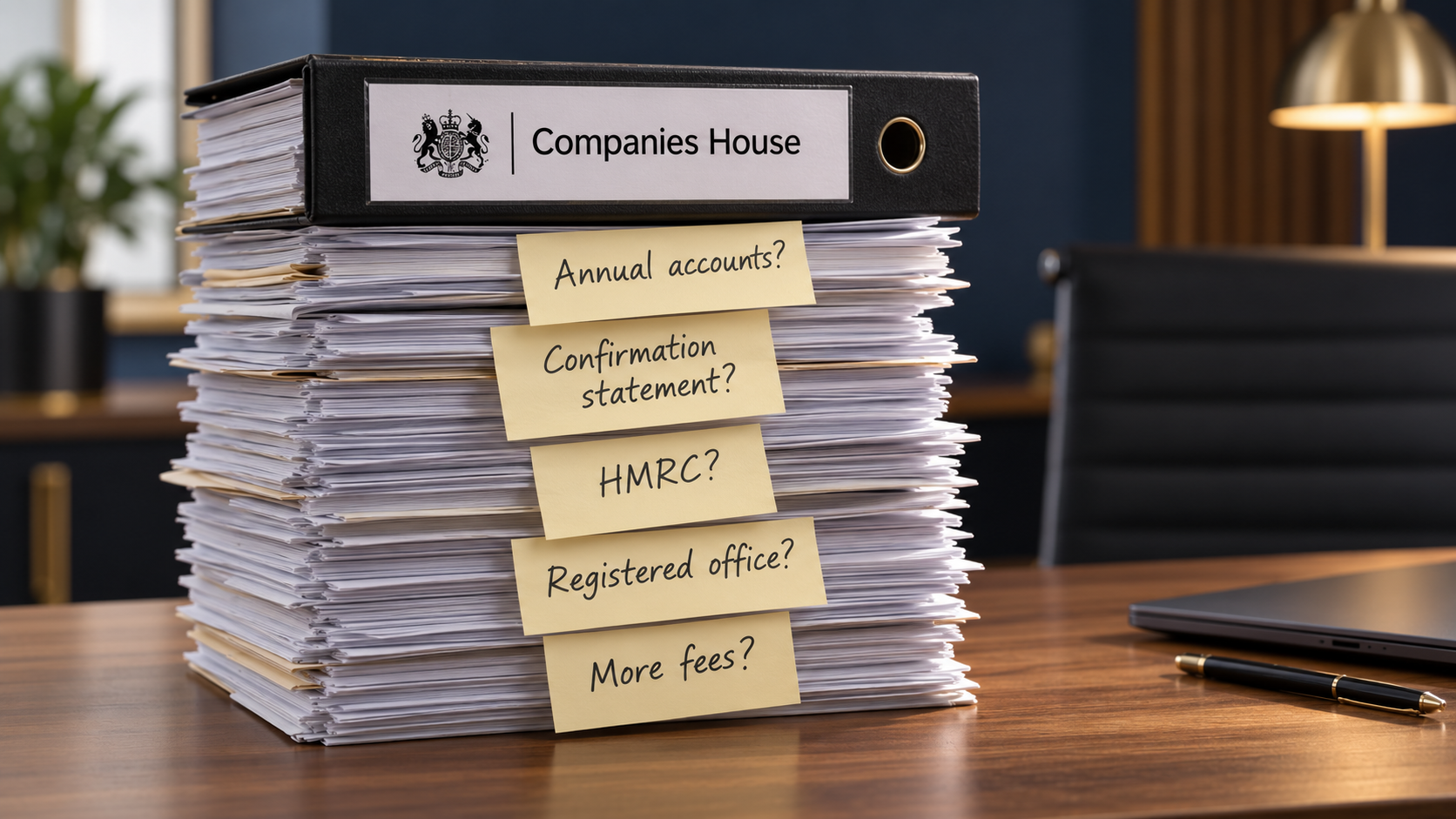
A dormant company still normally needs to file annual accounts with Companies House. Where it qualifies, a small dormant company can file the simpler form of dormant accounts, but there is still a filing and still a deadline. It must also file a confirmation statement at least once in each twelve-month review period, even where absolutely nothing about the company has changed. The current online confirmation statement fee is £50.
That means maintaining a dormant company now has a visible recurring cost as well as an administrative one. £50 a year may be trivial where there is a genuine reason for keeping the company, but it changes the calculation slightly for someone retaining half a dozen old companies “just in case” or holding onto a shell which they have not used for years and have no realistic intention of using again.
The Companies House identity-verification regime also applies irrespective of whether the underlying business is busy. Existing directors are now required to provide their Companies House personal code through the company’s confirmation statement process when their relevant filing falls due, and people with significant control have related verification obligations of their own. Dormancy does not place a company outside those reforms.
None of this should be especially burdensome. In fact, a properly managed dormant company should be extremely boring. Put the relevant dates in the calendar, ensure Companies House has the correct contact details, make sure somebody is actually reading the correspondence and deal with the filings when they become due. The problems tend to arise when “dormant” gradually becomes “I had forgotten that company still existed”.
Companies House and HMRC are separate conversations
Where the company is dormant for Corporation Tax, HMRC should also have the correct information. Once HMRC has been told that a company is dormant, it will generally not require further Company Tax Returns unless the company begins trading again or HMRC issues another notice requiring one.
There is an important trap here. If HMRC has already issued a notice requiring a Company Tax Return for a particular period, that requirement still needs to be dealt with. Deciding afterwards that the company was dormant does not make an existing notice vanish. This is one reason why official correspondence should never simply be put aside on the assumption that “the company does nothing, so it cannot owe anything”.
VAT and PAYE also need separate thought where the company traded before becoming dormant. A company which is VAT registered and does not intend to trade again will ordinarily need to deregister. Where it intends to restart, it may instead remain registered and continue submitting nil VAT returns while dormant. Similarly, where a company employed people and does not plan to restart employment during the tax year, the PAYE scheme may need to be closed. Dormancy is a description of the company’s activity. It is not a universal off switch for every registration the business has accumulated.
This matters particularly for companies which once traded actively and were then “put on ice”. The director may think there is now one dormant company to look after, while HMRC, Companies House, the VAT system, payroll software, the bank and perhaps an accountant all still have different pieces of that company sitting open. Before putting a company into the metaphorical drawer, it is worth checking what actually needs to be closed, maintained or updated.
Be careful not to wake it up accidentally
If a company is intended to remain dormant, the way it is used matters. Directors should be careful about casually putting transactions through it because the company bank account happens to be convenient, receiving unexpected income, starting to invoice again or otherwise recommencing business activity without considering the consequences.
A dormant company can restart trading perfectly legitimately. If it does, HMRC needs to be told and the company returns to the ordinary Corporation Tax and accounting regime. The problem is not waking the company up. The problem is waking it up without realising you have done so.
It is therefore worth keeping the dormant company genuinely separate. If another business is being operated as a sole trader or through another company, resist the temptation to move occasional expenses or receipts through the dormant company's account merely because the account still exists. Clean boundaries make the later accounting position considerably easier to understand.
Why are you keeping it?
There are legitimate reasons to maintain a dormant company. The business may be seasonal or temporarily paused. A project may be awaiting funding, regulatory approval or a change in personal circumstances. The founders may expect to restart within a year or two. Occasionally the company itself may hold something of value which makes preservation appropriate.
Some people also retain a dormant company mainly because they do not want to lose the company name. That may be a reason, but it should be weighed against the continuing filings and cost, and it should not be mistaken for complete brand protection. A Companies House registration and a trade mark are different things. If a business has actually traded under a name and built goodwill, there may be other legal considerations if somebody else starts using something similar, but preserving an otherwise useless company forever is not necessarily the best solution to a branding concern.
The more difficult cases are the companies being retained for no identifiable reason at all. The founder incorporated three years ago, the proposed business never happened, there are no assets and no intention to trade, but closing it feels unnecessarily final. So each year another confirmation statement is filed and the company continues to exist.
There is nothing wrong with that if it is a conscious choice. The better question is whether you would make the same choice today if the company did not already exist.
Dormant should be boring
If the answer is yes, keep it dormant and manage the small amount of administration properly. If the answer is no, consider whether it is time to close it. What matters is that dormancy is being used deliberately rather than becoming a holding pattern which nobody has reviewed for years.
A dormant company should be boring. It should have a few dates in the diary, accurate records, the correct status with HMRC and somebody clearly responsible for dealing with correspondence. Then it can sit quietly in the background until it is needed again.
Just do not mistake quiet for nonexistent.
 Practical support. Real solutions.
Related insights


When the issue is live, context matters.
Aubrey International supports employers and businesses with sensitive employment, commercial and regulatory matters where an independent view or practical additional support is needed.